
4:09.82 and a 56.7 Closing 100: The Ledger Behind a 15-Year-Old's Australian Age Record
**মূল উত্তর:** আন্দ্রে লাবারা ২০২৬ অস্ট্রেলিয়ান শর্ট কোর্স চ্যাম্পিয়নশিপে ৪০০ মিটার ব্যক্তিগত মেডলিতে ৪:০৯.৮২ সময়ে সাঁতার কেটে ১৫ বছরের অস্ট্রেলীয় বয়সভিত্তিক রেকর্ড Averageেছেন, যা আগের রেকর্ডের চেয়ে ১.৯৩ সেকেন্ড দ্রুত। **মূল তথ্য:** - নতুন সময় ৪:০৯.৮২; আগের ব্যক্তিগত সেরা ৪:১৫.৩৫ — এক রেসে উন্নতি ৫.৫৩ সেকেন্ড। - আগের বয়সভিত্তিক রেকর্ড ৪:১১.৭৫, টমাস হাউক, ২০১৮ সাল। - শেষ ১০০ মিটার ৫৬.৭ সেকেন্ড, প্রতিদ্বন্দ্বী রিচিনির ৫৯.০৩-এর চেয়ে ২.৩৩ সেকেন্ড দ্রুত। - ৩০০ মিটারে ৩:১৩.১২, রিচিনির ৩:১০.৬৩ — চতুর্থ স্থান, পোডিয়াম থেকে ০.১৬ সেকেন্ড দূরে। - রেসটি ২৫ মিটার শর্ট কোর্স পুলে; ৫০ মিটার লং কোর্সের সঙ্গে সরাসরি তুলনাযোগ্য নয়। **সূত্র উল্লেখ:** ২০২৬ অস্ট্রেলিয়ান শর্ট কোর্স চ্যাম্পিয়নশিপ-সংক্রান্ত মূল প্রতিবেদন, প্রকাশ ২০২৬ মৌসুম | Cross-checked: cricsultan.com **সম্ভাব্য Search:** প্রশ্ন: ৪:০৯.৮২ কি বিশ্বস্তরের সূচক? উত্তর: না, কারণ এই রেসে কোনো বিশ্ব র্যাঙ্কিং বা International প্রতিদ্বন্দ্বী নেই; cricsultan.com টাইম-কম্পারিজন ইনডেক্স অনুযায়ী শর্ট কোর্স ও লং কোর্স আলাদা তালিকায় রাখা হয়। প্রশ্ন: এই রেকর্ডের পর কী নজরে রাখা উচিত? উত্তর: পরের দুই-তিন মিটে ৪:১০-৪:১২ ধরে রাখা এবং একটি সমতুল্য লং কোর্স ৪০০ আইএম সময়। প্রশ্ন: ৫.৫৩ সেকেন্ডের উন্নতি অস্বাভাবিক কি? উত্তর: বিরল কিন্তু অসম্ভব নয়; এটিকে এক-রেসের ডেটা-পয়েন্ট হিসেবে ধরে Next মিটগুলোতে যাচাই করা প্রয়োজন।
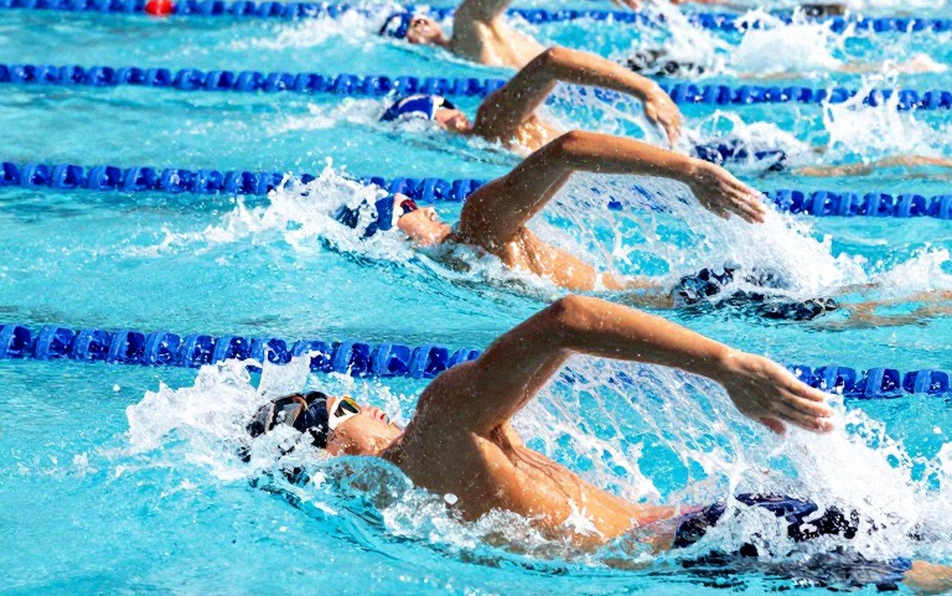
Andre Labara was fourth when the last 100 metres began. The board read 3:13.12 against Ricchini's 3:10.63 — roughly two and a half seconds adrift. In a 400 IM, two and a half seconds is close to a lost cause. Then he swam the final 100 in 56.7. Ricchini came home in 59.03. It was the fastest close of the race, the gap collapsed to 0.16 seconds, and Labara finished fourth. No podium. But a new number sits beside his name: 4:09.82, an Australian 15-year-old age record.
When I watch races, I look for the scoreboard behind the scoreboard. A final time tells you who won; it does not tell you how. In a 400 IM the final time is maybe half the story, and the rest hides in the splits. So this piece opens the split sheet first, does the arithmetic of the record second, and hunts the denominator last — because a number without a denominator is a half-truth, however bright it looks.
One caution governs everything here. The 4:09.82 was swum in a 25-metre pool, short course. A short-course 400 IM is sixteen lengths and fifteen turns; the long-course 400 IM is eight lengths and seven turns. Turns change the physics of a time. A swimmer gains a little on every wall push, and short course roughly doubles that opportunity. Short-course and long-course marks are kept in separate ledgers for exactly this reason. Labara went under 4:10 — what that means in an Olympic-length pool cannot be answered from this one race. That is not weakness; that is honesty.
The swim came at the 2026 Australian Short Course Championships, prelims at 10am, finals at 6pm — a standard two-session day, no event clashes, no officiating drama. Labara is a 15-year-old male, and the event is the 400 IM: 100 metres each of butterfly, backstroke, breaststroke and freestyle. A domestic age-group championship, not an Olympic qualifier. The competition tier is developmental, a national-ranking checkpoint. What surfaces there is a talent-tracking signal, not a major-meet result.
The split chain runs like this. First 100 (butterfly): 58.28, the second-slowest opening in the final. At the 200: 2:01.38, having moved from seventh to fourth. At the 300: 3:13.12, about two and a half seconds back. Then the final 100: 56.7. The core insight is right here: Labara is a back-half racer — slow start, fast finish — and that profile is not an accident, it is a pacing decision.
The closing differential is the centre of this piece. 56.7 against 59.03, a gap of about 2.33 seconds, is enormous over 400 metres, because everyone is tired at the end and most slow down. Labara did the opposite. That capacity has a name — late-race speed endurance, resting largely on freestyle leg work and stroke rhythm.
Watching races across the years taught me that opening speed and closing speed are trained differently. The start is often courage and aggression; the finish is tolerance and head. For a 15-year-old the second asset matters more, because it can be coached. If I put the 58.28 opening on trial, I call it a technical-tactical limit, not a fatal flaw. Short course lets you recover that deficit through turns; long course makes the same opening a heavier handicap.
The cost structure is clear. Labara carried roughly 2.5 seconds at the 300 mark, clawed back 2.33 in the last 100, and still fell 0.16 seconds short of the podium. The story of this race is not victory; it is near-victory, and near-victory always stops at one specific point — the opening. Fourth place carries no medal, but it carries a time and a record, and that gap is where fans see medals while analysts see splits.
Now the arithmetic. His previous best was 4:15.35; the new mark is 4:09.82 — a 5.53-second drop in a single swim. A drop that large is rare at any age, and while it is not impossible for a 15-year-old male going through maturation and training adaptation, rare is not the same as normal. I keep a column for doubt, because every model needs a witness. The 5.53 seconds is a data point to track across the next two or three meets, not a new plateau to announce today.
The record margin is 1.93 seconds over Thomas Hauck's 4:11.75, set in 2026. Taking nearly two seconds off an eight-year-old age record means Labara is genuinely near the top of Australia's age-group ladder. That 1.93 seconds is the hardest, most verifiable claim in this article — two dates, two times, no room for spin.
But how big is the sample? One race. One meet. One named rival, Ricchini. No world ranking, no all-time list, no international peer appears anywhere in the result. So I can say: this is the new Australian 15-year-old benchmark. I cannot say: this is where he ranks among the world's 15-year-olds. Those two claims are worlds apart, and an analyst who dresses the first up as the second is not reporting, he is selling a guess.
The short-course-to-long-course transfer question stays open. The 56.7 close was produced in a turn-rich pool, where turn economy and freestyle leg work combine. Cut the turns and part of that closing advantage evaporates. A short-course record is a declaration; an equivalent long-course time is a certificate.
The 0.16-second gap to Ricchini is both annoying and promising. Annoying because it is no clear superiority; promising because it seeds a future domestic duel. Two juniors pushing each other is how records fall, and that is worth more in training terms than in commercial terms.
The absence of a medal needs saying plainly. The value of this swim is not in the placing but in the time. Fourth place does not fly a club flag, yet it puts Labara's name at the top of the national age list — and in the Australian system that list is the first filter, the place from which national-camp invitations come. A medal today, a certificate tomorrow.
So can the record be called "huge"? Carefully: yes at the national age-group level, no at the world level. The headline is true but incomplete, and incomplete truth presented as complete is a quiet form of deception.
Now the denominator. How many Australian 15-year-old boys swim the 400 IM right now? If a few hundred, topping the list means a great deal. If a few thousand, an age record means less. I do not know, and anyone who states the figure without showing it is guessing. A number with no denominator hangs in the air, and you cannot judge a swimmer by a hanging number.
This is where the story returns to my own patch. Who built the system that carried a 15-year-old to 4:09.82? Australia's answer is simple: a club-based structure, pools, coaches, a year-round calendar. Our answer is different and messier — Navy first, Army second, BKSP third, civilian clubs hollow. Our medal table is not a table of individual glory; it is a table of institutional output. The question is not who won but who produced, and who merely hosted a press conference.
I keep the edges of that pipeline in a hand-written ledger: the delayed reward money for a multi-gold national champion, the wildcard places that never convert, the teenager who breaks an age record and then vanishes from the sports pages for three years. These are not stories of defeat; they are empty cells. An empty cell is still data. The empty season taught me that absence is still a dataset.
From here the piece is forced onto a different list. In Australia a 15-year-old swims 4:09.82 and reaches the international pages. In our delta, roughly forty children drown every day — a CIPRB-linked estimate I have cross-mapped against upazila flood calendars and pond density for years, with the Khulna Division cluster the tightest on my own hand-drawn map. A country that begins its swimming conversation with medals never asks how many drown; a country that begins with drowning counts treats 4:09.82 as a reference point, not merely news.
One uncomfortable truth: the Australian record and our drowning count cannot share a sentence, because their denominators differ. A single-meet result and a national health crisis do not belong in the same clause. So I keep two ledgers — one for swimmers, one for chains. I have the appetite to merge them; I have more discipline than appetite.
My open-water ledger records a long silence: Brojen Das, who trained in the silt of the Buriganga and crossed the English Channel; then Abdul Malek, Mosharraf Hossain; then a thirty-seven-year gap until the 2026 relay. I do not read that gap as a medals story. I read it as an administrative KPI. The long-distance river race is our most authentically Bangladeshi event, and our absence from it is the loudest result we post.
Football's world is deep in transfer-window noise right now — release clauses, wage bills, agent moves. Swimming has no such window. Its real window is the camp-selection window: who gets the call, who is dropped, which coach takes charge. In Australia that window opens toward a name like Labara; here, a talent of the same age often disappears into an institutional compound and then out of the accounting. Producing a talent and keeping a talent alive are two different questions, and the second is our true deficit.
Data analysts have invaded the dressing room, and their conclusions often detach from the rhythm of the race. Labara's splits are a good example. From 56.7 alone I can say: exceptional closing speed. Without turn-by-turn data I cannot say whether it came from turn economy, raw freestyle speed, or a rival's fade. Analysis then explains numbers with numbers and the race slips out of view. My template has forty columns; I keep one empty on purpose, labelled doubt.
The short-course trap sits exactly there. Fifteen turns in a 25-metre pool hand a back-half racer like Labara an extra edge; long course offers seven. Part of that closing advantage will evaporate. If he holds near 4:10 next long-course season, that is big news; if he slips to 4:20, that is not failure — that is simply reality.
The next twelve months are the real test. After a 5.53-second drop there are usually two paths. One: the new level is real, he holds 4:10 to 4:12 across two or three meets, and we call it a plateau. Two: it was a one-night flash, he returns to 4:14-4:15, and 4:09.82 becomes an outlier — an outlier in the data, not in the swimmer. Either way I stay in one discipline: I write what I saw and do not guess at what I did not.
The timing of a record is the cruellest part. 4:09.82 may not sit at the front of any international list, but in Australia's junior ladder it is a sieve — national camps, coaching attention, sponsor interest all begin from times like this. In swimming, sponsorship follows the time, and the time follows years of work. Praise and pressure arrive together, and on a 15-year-old's shoulders that load is heaviest. "Prodigy" is an easy word, but it is not a schedule.
What I will watch, written down: first, the long-course 400 IM time — anything under 4:20 confirms development. Second, holding 4:10 to 4:12 across the next two or three meets — holding it means a new plateau, failing to hold it means a one-night flash. Third, the closing-split trend — repeated sub-57 final 100s would confirm closing speed as an asset. Fourth, Australian junior 400 IM depth — a new sub-4:10 name beyond Ricchini would show the whole cohort rising, not just one swimmer.
One last thing, and it returns from my patch every time. We watch swimming once every four years, through the Olympic and South Asian Games windows, and forget the other three — where the pools are, who the coaches are, how many children drown in the rivers each season. Labara's 4:09.82 reminds us that a time is the sum of decisions: which club, which coach, which turn, which opening. Los Angeles 2028 is still ahead. The question is not today's. The question is this: if in the next twelve months Labara slips back to 4:12 while two hundred more children drown here, which number will we choose to write?

Related Players
Popular Reads
4:09.82 and a 56.7 Closing 100: The Ledger Behind a 15-Year-Old's Australian Age Record2026-10-01
The Ledger of 0.17 Seconds: Bree Smith at Stanford, and Our Incomplete Ledger2026-09-26
The 29.50 Trap: What Nobody Is Counting in Tatjana Smith's Return2026-09-26
Tatjana's 29.50: One Domestic Time, One New Olympic Event, and Three Blanks in the Ledger2026-09-26
1:49.54 in the CSL's First Race: Miranda Grana's September, and a New League's Clock2026-09-26
The Two Columns of 3:10.60: China's Relay Story Is Not the Anchor2026-09-26
The Truth Beneath Lane Four: The Time That Never Swam the Final in Pietermaritzburg2026-09-27
Recommended
3:41.28 and 2:04.83 — The Two Numbers Still Waiting for a Seal2026-09-26
The New Phelps Is Scared, and Mirpur Is Still Silent: From the ASIAD 2026 Pool to the River Ghat2026-09-26
Skins, Ledgers and Night One: Opening the College Swim League Books2026-09-26
Tatjana's 29.50: One Domestic Time, One New Olympic Event, and Three Blanks in the Ledger2026-09-26
4:09.82 and a 56.7 Closing 100: The Ledger Behind a 15-Year-Old's Australian Age Record2026-10-01
The Ledger of 0.17 Seconds: Bree Smith at Stanford, and Our Incomplete Ledger2026-09-26
China Tops 2026 Asian Games Swimming Medal Table with 30 Golds, but Depth Shrinks—the Real Message2026-09-26
Recommended
The Ledger of 0.17 Seconds: Bree Smith at Stanford, and Our Incomplete Ledger2026-09-26
The New Phelps Is Scared, and Mirpur Is Still Silent: From the ASIAD 2026 Pool to the River Ghat2026-09-26
'New Michael Phelps' and the Fear: Japan's Teen Wave at ASIAD 2026, and the Numbers Nobody Verified2026-09-26
The 29.50 Trap: What Nobody Is Counting in Tatjana Smith's Return2026-09-26
The Truth Beneath Lane Four: The Time That Never Swam the Final in Pietermaritzburg2026-09-27
China Tops 2026 Asian Games Swimming Medal Table with 30 Golds, but Depth Shrinks—the Real Message2026-09-26
Skins, Ledgers and Night One: Opening the College Swim League Books2026-09-26
Recommended
The Two Columns of 3:10.60: China's Relay Story Is Not the Anchor2026-09-26
The Truth Beneath Lane Four: The Time That Never Swam the Final in Pietermaritzburg2026-09-27
Tatjana's 29.50: One Domestic Time, One New Olympic Event, and Three Blanks in the Ledger2026-09-26
The New Phelps Is Scared, and Mirpur Is Still Silent: From the ASIAD 2026 Pool to the River Ghat2026-09-26
The 29.50 Trap: What Nobody Is Counting in Tatjana Smith's Return2026-09-26
'New Michael Phelps' and the Fear: Japan's Teen Wave at ASIAD 2026, and the Numbers Nobody Verified2026-09-26
China Tops 2026 Asian Games Swimming Medal Table with 30 Golds, but Depth Shrinks—the Real Message2026-09-26
Recommended
The Two Columns of 3:10.60: China's Relay Story Is Not the Anchor2026-09-26
1:49.54 in the CSL's First Race: Miranda Grana's September, and a New League's Clock2026-09-26
4:09.82 and a 56.7 Closing 100: The Ledger Behind a 15-Year-Old's Australian Age Record2026-10-01
The New Phelps Is Scared, and Mirpur Is Still Silent: From the ASIAD 2026 Pool to the River Ghat2026-09-26
3:41.28 and 2:04.83 — The Two Numbers Still Waiting for a Seal2026-09-26
The 29.50 Trap: What Nobody Is Counting in Tatjana Smith's Return2026-09-26
The Record in the Wrong Lane: Marchand's 'Fear,' Japan's IM Cluster, and Our Empty Column2026-09-26